Friday, 8 November 2013

Back at work 1 - De vuelta al trabajo 1


[ENGLISH] today (yesterday) was my first day on campus. After a few days of starting to deal with the almost 2000 emails accumulated in my inbox, and a quick couple of meetings that I attended with R, today, for the first time, I left my 3 months old son for a few hours with a “nanny” and went into work. Now, I think that the information provided in this short paragraph deserves further analysis. Namely: (1) almost 2000 e-mails; (2) attending meetings with R; (3) a “nanny”; and, (4) how to keep on breastfeeding while you are back at work (there is a clue in one of the photos)… watch the next few posts coming, today I will only speak about e-mail while on leave.
 
*My lovely nanny is a good friend who is studying so it is good for her and good for me.

My inbox right now - Mi bandeja de entrada
ALMOST 2000 EMAILS:  is it really leave if your work is being piled up for you while you are away? is it expected that I should deal with every old email or should I just delete them and start from scratch? There are several categories (1) those sent not knowing that I was on leave, I assume some of them will resend their email sometime once they learn that I am back; (2) those sent for my information, someone was dealing with it but cc’ed me so I knew, they will not send that info again and they expect me to read it; (3) those send by someone who knows I am on leave and yet they still send it so I read it on my own time when I return; (4) mass emails and automated announcements; and, (5) spam, bogus conference and journals appreciating my knowledge in [please insert here something totally unrelated to my research]

What to do? I want to delete them but I guess that I will just scan the subjects, open a few and then leave all the unopened e-mails in my inbox… the truth is that this problem also occurs after having been on recreational or any kind of leave…

Should employees have the right to turn their e-mail off while they are on leave? I think so!
 
      
      [ESPAÑOL] Hoy (ayer) fue mi primer día de vuelta al trabajo. Durante unos días me dediqué a comenzar a leer los casi 2000 correos electrónicos acumulados; después fui a un par de reuniones informales con R; y hoy, por primera vez, dejé a R con una “canguro” y me fui a trabajar. Ahora bien, en este párrafo tan corto hay varias cosas que deberían ser analizadas: (1) casi 2000 correos; (2) asistir a reuniones con R; (3) una “canguro”; y, (4) cómo volver al trabajo con un niño de pecho sin dejar de darle el pecho (hay una pista en una de las fotos)…. Hay tema para muchos posts, hoy sólo voy a escribir sobre el correo electrónico durante una baja...
 
      *Mi canguro es una buena amiga que está estudiando, a ella le viene bien y a mi tambien. 


The cause of my email trouble
La causa de mi acumulación de correos
        CASI 2000 CORREOS: la pregunta es, si durante tu ausencia, por baja o por lo que sea, se acumulan todos estos correos (que representan trabajo), es realmente una baja? Cuáles son las expectativas? De verdad alguien espera que me dedique los próximos días (semanas?) a leer correos atrasados?  O debería borrarlos todos y borrón y cuenta nueva? (esta última opción es MUY apetecible). La mayor parte de los correos que he recibido se pueden clasificar en: (1) aquellos enviados sin saber que estaba de baja, me imagino que esta gente, al recibir mi mensaje automático de que estoy de baja mandarán el mensaje de nuevo; (2) aquellos enviados para que me dé por enterada, vamos, que algún compañero se está encargando de hacer algo que me afecta y me copia en el correo para que lo sepa; (3) aquellos que empiezan con un “ya sé que estas de baja pero te lo mando igual para que lo leas y me digas que piensas cuando vuelvas”; (4) correos y anuncios generales; y, (5) spam y mensajes no deseados invitándome a participar en conferencias y revistas especializadas en cualquier cosa que no tiene nada que ver con mi tema de investigación.

Qué hacer? Lo que realmente quiero es borrarlos todos pero creo que no debo… lo que acabará pasando es que me pasaré varios días leyendo por encima y respondiendo lo que parezca más importante y después me quedarán unos cientos de correos sin abrir en el buzón de entrada. Este problema se repite cada vez que me ausento, ya sea por vacaciones o lo que sea. 


Deberíamos poder desconectar el correo electrónico completamente cuando nos ausentamos del trabajo? Yo pienso que sí!

Monday, 4 November 2013

Thermomix


Spaghetti with mussels
Espagueti con mejillones
[ENGLISH] I am now the happy owner of a Thermomix. As if traveling with two kids wasn’t hard enough, in the way back from Spain I brought a Thermomix with us! If you use it all the time, the Thermomix can be a really useful kitchen gadget, you can use it for pretty much everything and then, it becomes a good investment; indeed, some say that it is the kitchen’s Rolls Royce. For some people though, it becomes a very expensive blender with which they cook a few times a year only. Now, I have been thinking about buying one for 5 years now… I am slow, I know J, and finally I decided that buying it while on maternity leave was ideal so I could force myself to use it everyday. In that way I could learn how to use it and adapt my cooking. So far, so good, I am learning and enjoying cooking in my new Thermomix. The list of the dishes I have cooked so far is in the end of the post. Most of the recipes are from Thermomix’s books but I have already started improvising in some of them… that is the case of the spaguetti with mussels which were utterly delicious and G loved them.
Thermomix cooking chicken stew
Thermomix con pollo al chilindron

Pollo al chilindrón – Chicken stew
Cordero a la pastor – Lamb stew with almonds and garlic
Salmorejo – Cold tomato soup (similar to Gazpacho but not the same)
Spaguetti con Mejillones – Spaguetti with mussels
Quiche Lorraine
Fideos con garbanzos y mejillones – Angel hair with chickpeas and mussels
Risotto con pollo y chorizo – Risotto with chicken and chorizo
Guacamole con atún – guacamole with tuna
Ternera estofada - Veal stew 


Veal stew  Ternera estofada
[ESPAÑOL] Tengo que anunciaros que al final ya tengo la Thermomix! Y digo al final porque llevaba ya 5 años pensando que si era o no para mí. Al final me decidí y, no contenta con venirme yo sola desde Vigo con 2 niños, me traje una Thermomix también por eso del “más difícil todavía”. La Thermomix, si se usa, es un instrumento de cocina muy útil, de hecho se le ha llamado el Rolls Royce de la cocina; ahora, si no se usa, se puede convertir en la picadora más cara de la historia en la que a veces se hacen un par de recetas al ano. Pues bien, al final me decidi pensando que durante la baja tendría tiempo y motivación para aprender a usarla. Y ha funcionado, estoy encantada aprendiendo a usarla y, lo que es mas importante, ya me estoy animando a improvisar mis propias recetas. La lista de las recetas que hecho hasta ahora esta al final de este post, la mayoría son de los libros de la Thermomix o sacadas de internet pero alguna ya es mia, como, por ejemplo, los espaguetis con mejillones que me quedaron de lujo y le encantaron a G.


Sunday, 27 October 2013

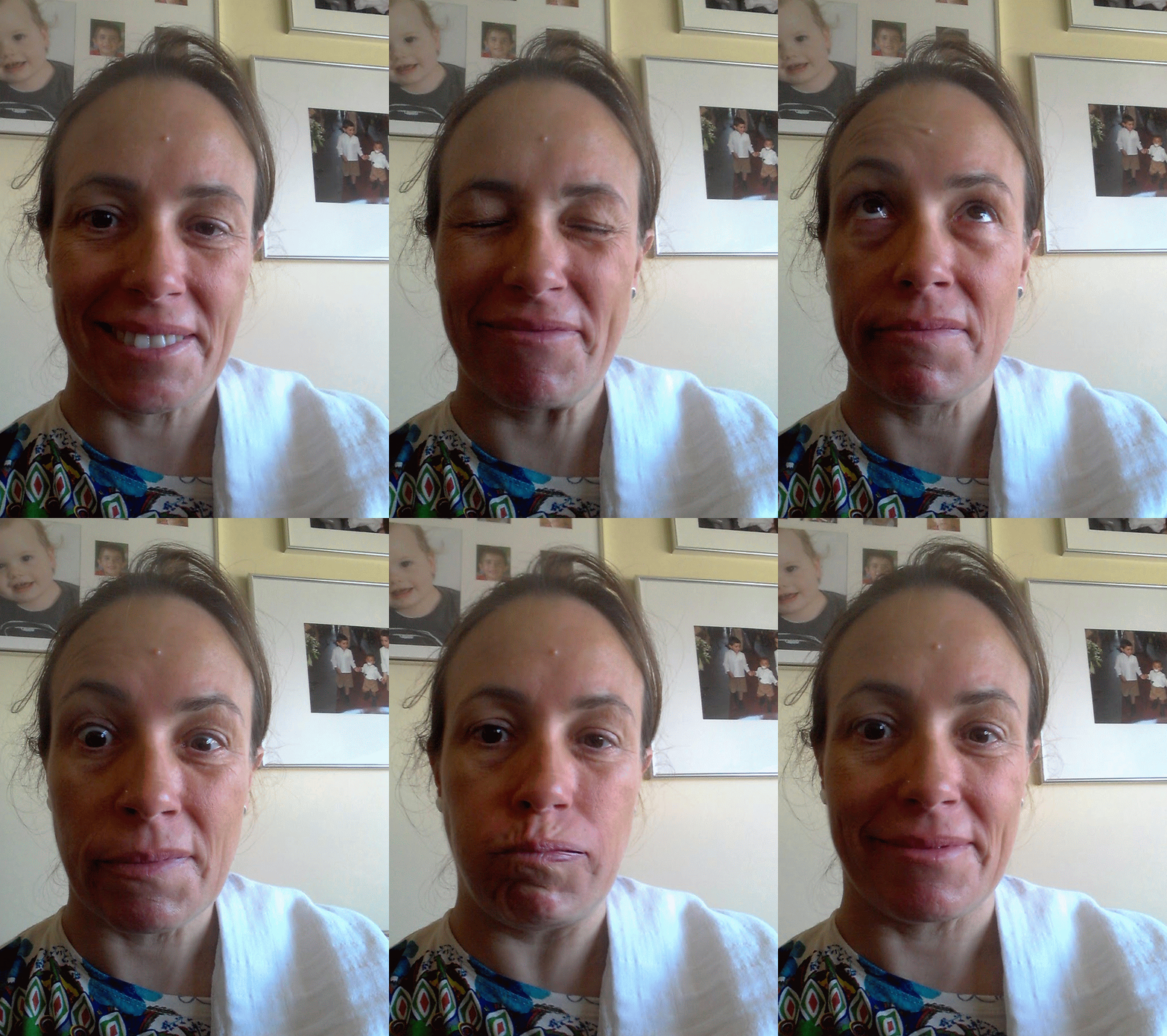
6 months of Bell's Palsy - 6 meses de Parálisis de Bell


[ENGLISH] It has been 197 days since my face felt weird and stopped working. It was so sudden that it was scary, and it was so sudden that I could not really understand the implications that it would have for my life. I could not foresee either that it would last this long. I had no idea; I was told I had Bell’s Palsy, that I would recover and that I could keep on going with my normal life. Nothing to worry!

The reality is that my life changed, I was suddenly unable of smiling or blinking. Daily things that you take for granted like the ability of drinking from a glass without spilling or rinsing your mouth after brushing your teeth were suddenly impossible to perform. My eye was so paralysed that when I tried to put some make up (to see if I could somehow improve my appearance), I put the brush with the powder INSIDE my eye and it hurt. I was also tired all the time and with no energy to continue with my normal life. I could not drive and I could not look into a computer for an entire day. I could not work. I am an academic and had a PhD student finishing and read his final chapters with only one eye while tears of not blinking and desperation where constantly flowing from my other eye. I was pregnant with my second son and I could not smile.

I slowed down and tried to rest, tried everything I could, from herbal remedies to Reiki and acupuncture but real improvements only started a few weeks before giving birth. My son is now almost 3 months old and improvements have occurred very slowly and steadily over the last 3 months. Some days it feels like I am going backwards but others show great improvements. My face started to heal with the muscle that pulls the side of my mouth towards my ear, faking a somehow crooked smile. Then I could close my eye. Then I could blink (slowly) and squint (slowly). And the round muscle around my mouth, the orbicular, started working again (a little) only two days ago.

Every time a muscle wakes up I feel tingling in the area for a few days and that is followed by the possibility of doing slight movements. I have had no twitching, something that is reported by many fellow BP sufferers, but I am still healing. I have been told by a neurologist that given how severe the paralysis was and how long it is taking for healing, that I will have sequels. It is hard to accept that the last time I smiled like I always did was the 11th of April 2013 and that now I am learning to smile in a different way. It is very hard, and it is not a question of beauty, it is a question of who I am. My smiled defined me, it was how I was, it was who I was. Now I am starting to smile in a different way, it is still me but I don’t see it when looking at myself in a mirror; the gesture that I see in the mirror is not my smile. Still, I am over the moon with every new movement and then I smile. I imagine that by using it, that new smile is becoming my smile.


[SPANISH] Hace 197 días que no puedo mover la cara normalmente. Todo ocurrió tan de repente que asustaba, y tan de repente que no podía ni imaginarme que lo que estaba pasando me afectaría durante tantos  meses. No tenía ni idea de lo que era una Parálisis de Bell; me dijeron que me recuperaría y que a seguir haciendo vida completamente normal. Que no me preocupase!

Pero lo que en realidad ocurrió fue que la incapacidad de sonreír o de parpadear sí que me impidió llevar una vida normal. Acciones cotidianas como beber de un vaso sin derramar  o enjuagarme la boca después de lavarme los dientes se convirtieron en tareas imposibles. Mi ojo izquierdo estaba tan paralizado que un día que decidí maquillarme a ver si mejoraba un poco mi aspecto, me metí todo el pincel con la sombra de ojos DENTRO del ojo. Estaba cansada todo el tiempo y sin energía para continuar haciendo vida normal. No podía conducir ni usar un ordenador durante las horas necesarias para hacer mi trabajo. Soy profesora e investigadora universitaria y los últimos capítulos de uno de mis alumnos de doctorado los leí con un ojo sólo mientras por el otro ojo caían lágrimas de sequedad ocular y desesperación. Estaba embarazada de mi segundo hijo y no podía sonreír.

Intenté parar un poco y tomarme las cosas con calma. Probé todo lo que pude, desde medicina alternativa a acupuntura y Reiki pero la mejoría solo comenzó un par de semanas antes de dar a luz. Mi hijo tiene casi 3 meses ya y he estado mejorando muy despacio durante este tiempo. Algunos días parece que empeoro pero en otros la mejoría es clara. Mi cara empezó a curarse con el músculo que estira la boca hacia la oreja, de tal manera que conseguía forjar una sonrisa torcida. A continuación pude cerrar el ojo sin forzar. Después puede pestañear (despacio) y fruncir el ceño también despacio. El musculo circular alrededor de mi boca, el orbicular, ha comenzado a funcionar un poco hace dos días.

Cada vez que un músculo se despierta, siento cosquilleos en esa zona durante los días anteriores; después de los cosquilleos aparece la posibilidad de mover un poquito esos músculos. La sensación es impresionante, siento como los músculos y la piel se estiran y se mueven como si los estuviera estirando al máximo cuando la realidad es que los muevo poquísimo. Me ha dicho un neurólogo que dada la severidad de mi Parálisis de Bell y la duración de la misma, que lo más probable es que me queden secuelas.  Resulta muy duro aceptar que la última vez que sonreí “como siempre” fue el 11 de abril del 2013, y como no sabía que eran las últimas sonrisas no me molesté en saborearlas y disfrutarlas. Ahora estoy aprendiendo a sonreír de otra manera. Es duro, no es sólo la cuestión de la belleza estética, es la cuestión de mi identidad. Mi sonrisa me definía, yo era como mi sonrisa, yo era mi sonrisa. Ahora que sonrío de manera diferente, aun soy yo la que sonrío pero la mueca que me devuelve el espejo no la reconozco como mi sonrisa. Aun así, estoy encantada; cada nuevo movimiento me hace feliz y entonces sonrío. Me imagino que con el uso,  la nueva sonrisa se acabará convirtiendo en mi sonrisa.


Thursday, 24 October 2013

I am back – De vuelta


[ENGLISH] I have been away, I went to Spain with R and G to see my family as only my mother had met R before. It was a great trip but incredibly hectic and my blogging attempts were neutralised by a computer that wouldn’t connect to the internet…. Yes, I could have done it in my tablet but then checking the spelling becomes too time-consuming.

The trip was fantastic; it was epic to do it on my own with both kids but G is a good traveler and R is a good baby! It wasn’t easy but it was doable. I will soon write a post on traveling with kids so I can share my experience. I have done it 5 times just with G and once with both of them and sharing is caring; I remember how I frantically searched the internet trying to find out how people did it before doing it with G for the first times.

The 12th of October marked 6 months of Bell’s Palsy; I am better but nowhere near where I thought I would be after 6 months. I also saw a neurologist who said that I should be getting ready for sequels as my BP is taking very long to heal… there are bad news and there are good news but this is the theme for another post.
 
I spent most of my time with family and friends. It was great seeing them and sharing with them the joy that R is. It was good seeing how G played with his cousins and how he loved staying with his grandparents. It was amazing seeing my parents enjoy both G and R and catching up with those friends whose friendship has survived the many years that I have been living overseas (since 1998). Even though it was sad for everyone when we left, we were happy that we had the opportunity of seeing each other for 5.5 weeks. Saint Skype and its miracles will do the rest for us during the following months.

Now I am just waiting for my jetlag to pass so I can have my brain back and write posts that are not as disconnected as this one.  

[SPANISH]  He estado fuera; estuve en Vigo con R y G visitando a mi familia ya que sólo mi madre conocía a R. Fue un viaje fantástico pero, como siempre que vuelvo a Vigo, una auténtica locura. Mis intentos de escribir en el blog fueron neutralizados por un ordenador que se negó a conectarse a la internet... intenté hacerlo en la tableta pero las herramientas de corrección eran un auténtico peñazo.


El viaje estuvo genial; la verdad es que fue épico hacerlo yo sola con los dos niños pero G viaja genial y R es un bebé buenísimo. No fue fácil pero sí perfectamente factible. Uno de estos días escribiré un post sobre como viajar con niños. He hecho el viaje a Vigo desde Australia 5 veces con G y una vez con los dos niños y compartir es querer; aun me acuerdo de como antes de viajar con G las primeras veces buscaba por internet ideas de cómo sobrevivir al viaje.

El 12 de Octubre, además del Pilar y la Hispanidad, marcó 6 meses de Paralisis de Bell; estoy mejor pero la verdad es que no estoy como esperaba estar. Durante el viaje fui a ver a un neurólogo y me dijo que me preparase para tener secuelas ya que mi parálisis estaba durando mucho… hay buenas y malas noticias pero eso es tema para otro post.

Me pasé la mayor parte del tiempo con mi familia y amigos. Fue maravilloso estar con ellos y compartir la alegría de R. También, ver jugar a G con sus primos y como le gusta estar con sus abuelos. Emocionante ver como mis padres disfrutaron de la visita de sus nietos (también les gusto verme a mí, pero menos). Me encantó ver a mis amigas del alma, aquellas cuya amistad ha sobrevivido el paso de todos los años que llevo fuera y de todo lo que hemos vivido mientras tanto. Fue triste cuando nos fuimos pero al mismo tiempo nos sabíamos afortunados de poder haber pasado cinco semanas y media en Vigo. San Skype y sus milagros harán que sigamos juntos durante los próximos meses.


Ahora solo me queda esperar a que se me pase el jetlag y volver a tener cabeza para escribir un poco mejor.

Tuesday, 3 September 2013

Maternity leave Baja por Maternidad


[ENGLISH] I am on leave, I am one of those lucky ones that in Australia gets paid maternity leave, and I get my full salary too. For 6 months, all I need to do is take care of the little dude. However, I have decided to spread my leave for as long as I can and I will return to work in November but only three days a week, the other two are part of my leave. With this, I can slowly get into work while making sure that I know what I am doing with my two sons

I am trying to make the most out of my leave, putting order in wardrobes and doing stuff that I know that I would never do unless I am stuck at home with a couple of hours to use in between feeds. I have also started checking my work e-mail every couple of days. I am in touch with research students as I feel that I cannot just disappear from their research project. And there are a few colleagues (male of course) that think that I am ready just to come in and have a short meeting…. Well… no, the answer is no, time is too short in between feeds at the moment and I couldn’t really focus as I should.

This brings me to the next topic that is the necessity of maternity leave. I happen to have recovered from the birth beautifully, and R is a good baby so I can adjust fairly well. The other day someone told me that I was proof that women don’t really need 6 months to recover from child birth, that we should just keep on going how it had been done all through history with women going back to their work (in the farm or whatever) straight after birth. Can we really do that? Well, yes and no. In those times people lived in real villages where the entire village would help raising every child; also, women would go back to work (and take the child with them) but I am guessing that nobody was expecting that they would have the same or better productivity than before the child. In my case: (1) I have wonderful friends that are willing to help but I cannot rely on them to care for my sons 8 hours a day, 5 days a week; (2) in fact, I need to arrange childcare which in Sydney is very expensive (over $100 a day for a baby) and hard to get (I have put R’s down in 7 centres… let’s see if we get a spot somewhere); and, (3) my employers expect me to be as productive (or more) as before I had this baby (hopefully utter exhaustion will enhance my creativity). So, yes, I need the leave, I cannot take the baby with me and casually breastfeed him while I deliver a lecture, I don’t think it would be wrong, I just think that society is no longer ready for that… and it would be really distracting for me… what if he falls sleep while he feeds as he often does? Do I just ignore him or interrupt the lecture to wake him up? And do I get him to burp in between lecture topics?

Paid maternity leave does not make me want to have more babies; it just makes it easier for me to take my time to get organised so I can return to work while I care for a very young citizen.

*Please note that I am talking here of maternity leave, because I think that the mothers need a time to recover from labour and to adjust to feeding etc. I do think that fathers also need leave so they can adjust to their babies but that will be the topic of another post.


[ESPAÑOL] Estoy de baja, y me pagan mi salario mientras estoy de baja; soy una afortunada ya que en Australia esto no es lo normal. En teoría, durante los próximos seis meses, todo lo que tengo que hacer es cuidar al churumbel. Sin embargo, he decidido modificar la baja de tal manera que volveré al trabajo en noviembre pero lo haré sólo 3 días por semana, los otros dos serán parte de mi baja. De esta manera me aseguro de que antes de volver a la jornada completa, soy capaz de cuidar de mis dos hijos y de organizar mi vida.

 Estoy intentando aprovechar la baja al máximo, y no, eso no consiste en salir por ahí y dormir a pierna suelta, estoy ordenando armarios y organizando cosas domésticas que si no llego a tener un par de horas entre tomas, nunca las haría. También he empezado a ver el correo electrónico otra vez. Estoy en contacto con alumnos de postgrado de investigación ya que creo que no debo desaparecer completamente de sus proyectos de investigación. Hay también un par de colegas (hombres, por supuesto) que piensan que me pueden liar para una reunión cortita… pues, no, la respuesta es no, hay demasiado poco tiempo entre tomas y no me puedo concentrar de manera adecuada. Estoy cansada y me cuesta pensar… mucho más responder preguntas y estar atenta a la dinámica de una reunión.

Esto me trae directamente al siguiente tópico sobre el quería escribir hoy, que es la “necesidad de la baja por maternidad”. La verdad es que me estoy recuperando fenomenal del parto, además R es buenísimo así que puedo descansar y adaptarme a la nueva situación. El otro día, recibí un comentario en el que me decían que yo era una de las pruebas que mostraban que las mujeres realmente no necesitan los 6 meses de baja pagada para recuperarse y que podrían reincorporarse antes. Vamos, que las mujeres podían, como siempre han hecho históricamente, reincorporarse al trabajo (en la granja o lo que sea) casi directamente después de dar a luz. Se puede hacer eso? Bueno, sí y no. En aquella época la gente vivía en pueblos en los que todos los miembros de la comunidad participaban en la educación y cuidado de todos los niños; además, las mujeres volverían al trabajo (llevándose al bebe con ellas) pero me imagino que nadie les exigiría mantener o mejorar los niveles de productividad anteriores al parto. En mi caso: (1) tengo unos amigos geniales y maravillosos que me ayudan en lo que pueden pero no podría dejarles al niño 8 horas al día 5 días por semana para poder irme a trabajar; (2) de hecho, necesito guardería lo que en Sydney no solo es caro (más de 100 $ por cada niño menor de 2 años) si no que también es difícil de encontrar (R esta apuntado en lista de espera en 7 centros!); y, (3) mis jefes esperan que mantenga o mejore la productividad tras mi reincorporación (espero que el agotamiento que tengo contribuya a mi creatividad). Así que yo personalmente necesito la baja, no podría llevarme el bebé conmigo y darle el pecho como quien no quiere la cosa mientras doy una clase… no es que crea que está mal, sino que creo que ni la sociedad ni yo misma estamos preparados… me distraería un montón, que hago si se duerme mientras mama? Interrumpo la clase para despertarlo? Aprovecho la pausa entre tópicos de la clase para hacerle eructar?


La baja por maternidad pagada no hace que quiera tener más niños, simplemente facilita mi reincorporación al trabajo de tal manera que me puedo organizar para trabajar al mismo tiempo que cuido de mis pequeños ciudadanos.

*Hablo sólo de la baja de maternidad porque creo que las mujeres necesitan tiempo para recuperarse del parto y adaptarse a alimentar (dar pecho) al bebé etc.  Estoy firmemente a favor de una baja de paternidad, ya que los padres también necesitan adaptarse pero creo ese es un tema para otro día.